
Keep Big Oil out of our skies
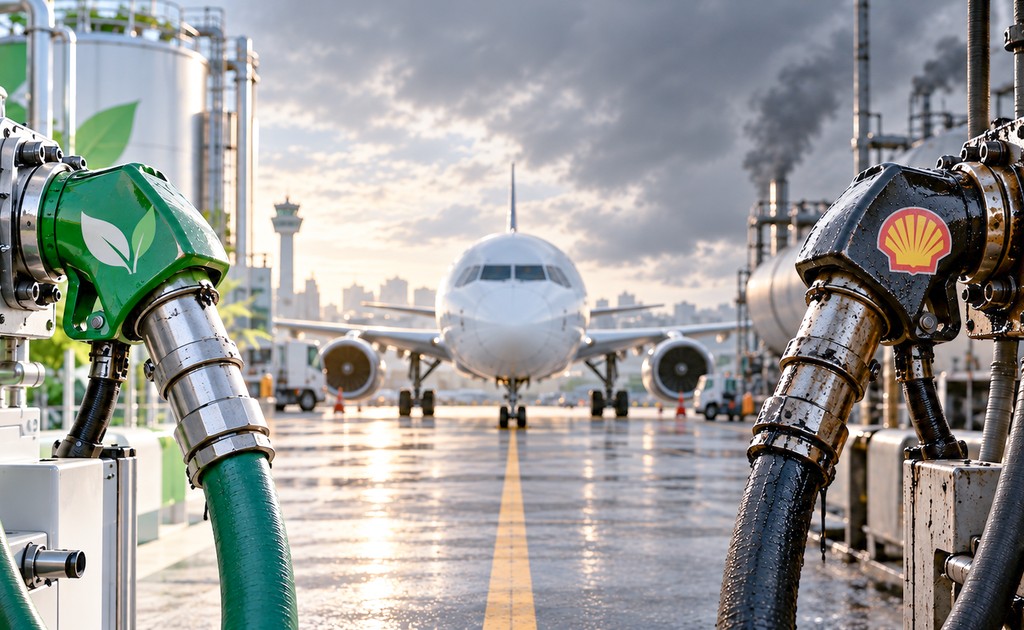
To the European Commission, Members of the European Parliament and Heads of State in the EU
Petition
Keep the EU's cleaner fuel law for planes strong, and don't let Big Oil gut it.
Planes can already fly on cleaner fuel. It's one of the best chances we have to cut the damage flying does to our planet.
But a handful of oil companies control almost every drop of jet fuel in Europe. Under the law, they're the ones who must deliver the cleaner fuel. Instead of investing in it, they're lobbying to reopen and weaken the rules.
As you review ReFuelEU, we call on you to keep every target in the law, with no delays:
- 6% cleaner fuel in every plane's tank by 2030, 20% by 2035, and 70% by 2050.
- E-fuels made from renewable electricity: 1.2% by 2030, rising to 35% by 2050.
- Strong penalties for fuel suppliers who miss these targets, so it's never cheaper for oil companies to pay a fine than to supply cleaner fuel.
Why is this important?
There's good news you probably haven't heard: there is a cleaner way to fly. Planes can already fly on clean fuel made from waste like used cooking oil, instead of crude oil dug from the ground. [1]
It's one of the best chances we have to stop flying from wrecking the planet. With no changes needed to our existing planes.
The EU has even passed a law to make it happen. Every plane's fuel tank must hold a growing share of clean fuel. Starting small today and rising to 70% by 2050. [2]
But a handful of oil giants like BP, Shell and Total control almost every drop of jet fuel in Europe. They own the pipelines and the tanks at the airport. And instead of building or using the clean fuel we need, they're lobbying to kill this law.
A world that flies on used cooking oil doesn't need them. That's a big problem for them.
Big Oil is counting on one thing: that a law hardly anyone has heard of can be gutted without anyone noticing. And it’s happening as you read this. [3] But if thousands of us tell EU leaders we want clean fuel, they'll know the lobbyists aren't the only ones in the room.
References:
[1] Clean aviation fuel, known as Sustainable aviation fuel (SAF), includes not only cooking oil and animal fat, but also biofuel made from municipal solid waste, forestry residues, and agricultural waste, and e-fuels made by combining captured carbon dioxide with green hydrogen produced using renewable electricity. https://uploads.transportenvironment.org/production/files/202603_SAF_Factsheet.pdf?dm=1773407228)
[2] Under the law, it's fuel suppliers, not airlines, who must put cleaner fuel in the tank. Cleaner fuel still costs more than fossil jet fuel and much of the waste used to make it is imported, so the law works best alongside public investment in affordable cleaner fuel made here in Europe, which the EU has begun to provide. https://transport.ec.europa.eu/transport-modes/air/environment/refueleu-aviation_en ; https://uploads.transportenvironment.org/production/files/202603_SAF_Factsheet.pdf?dm=1773407228
[3] The EU is expected to publish its proposal for the fast-track simplification of ReFuelEU Aviation – the law that would bring clean fuel to planes – in early Autumn. https://www.ebaa.org/news/refueleu-simplification-what-is-really-on-the-table-for-operators